
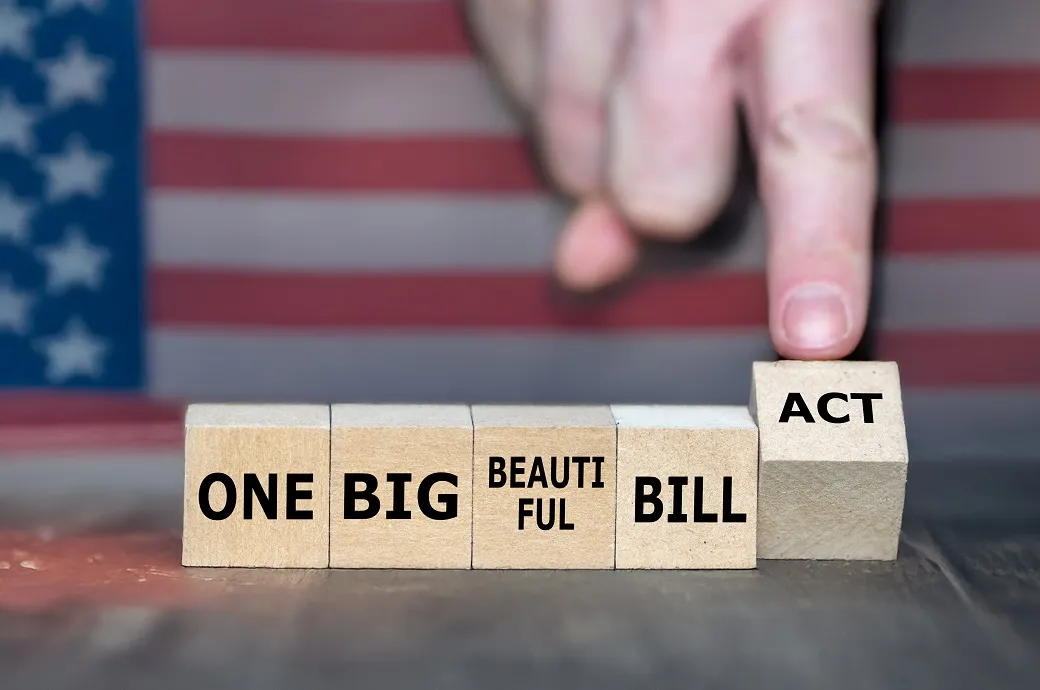
Ever since the Big Beautiful Tax Bill 2025 dropped as a comprehensive reform package that promises to reshape the American tax landscape in ways unseen since the passage of the TCJA, the political world has been abuzz. Most discussions focus on how this bill affects working families, how the new Big Beautiful Tax Bill affect the middle class, or small businesses. The most important, boldest shifts are occurring at the top of the income ladder. And whether one views these changes as overdue relief or fuel for widening inequality, there is little denying that high earners stand at the center of this debate.
In this blog, we delve into how this tax bill affects the upper class, where the benefits truly fall, and how certain provisions in the Tax Cuts and Jobs Act create both opportunities and tensions. We also explore what this means for federal tax planning of wealthy households in the years ahead. Think of it as a guided tour through a very expensive maze: complex, controversial, and full of surprises.
A New Era of Wealth-Friendly Tax Reform.
To truly understand the impact of the Big Beautiful Tax Bill 2025, imagine being a wealthy business owner or investor opening your annual tax portfolio. Suddenly, several tax breaks that you once assumed were temporary appear set in stone. Deduction limits that once felt suffocating suddenly expand. Estate planning, once a complicated dance between trusts, accountants, and last-minute strategies, feels smoother, simpler, and far friendlier to large family fortunes.
This is no accident. Analysts observing early drafts of the law have already argued that the bill is crafted in a way to significantly shift incentives toward high-income individuals. The idea that the bill is “beautiful” is not philosophical; it’s financial. According to news reports and tax experts, the package contains multiple provisions that provide outsized relief to high earners, investors, and business owners, while long-term structural concerns about inequality linger.
So yes, the Big Beautiful Tax Bill 2025 brings benefits for the ordinary taxpayer, but the upper class? They get something closer to a full financial makeover.
Income Taxes: Relief at the Top.
Changes in high-level tax brackets are one of the central ways in which the bill affects upper-income households. This bill embeds changes to upper-class taxes, keeping the top marginal tax rate below pre-TCJA levels, as many had expected it would return to. Instead of rising, the top rate stays at 37%, saving high earners from what would have been a large increase in tax liability.
That is, CEOs, business owners, physicians, partners in large law firms, and high-earning executives immediately see a tangible reduction in what they owe each year. It also creates a widened gap between the upper class and middle-income earners, especially because the bill doesn’t provide the same scale of relief to wage-workers in the lower brackets.
Some critics have already noted that tax increases for high earners in future budget revisions might be a worrying development, given that permanence in such cuts may result in aggressive taxation later as the government tries to compensate for the lost revenue. For the time being, though, the wealthiest taxpayers have stability, which is a very valuable commodity when multi-year investments and long-term strategies of wealth strategies are planned.
Business Income and Pass-Through Advantages.
Perhaps one of the most discussed components found in your reference articles is keeping the 20% pass-through business deduction. Business owners who operate through LLCs, S corporations, partnerships, and sole proprietorships are able to save on taxes by just owning a qualified business.
This is transformative for wealthy taxpayers.
A high-income salaried employee pays full freight on their earnings, but a business owner with comparable income may legally shelter tens, sometimes hundreds, of thousands of dollars because of this deduction. It’s not just a break; it’s a generational advantage disguised as a small-business incentive. And the Big Beautiful Tax Bill 2025 strengthens it.
Add to that the new permanent bonus depreciation rules that allow businesses to deduct 100 percent of certain equipment or asset purchases, and what you have is a tax code in which the wealthy can dramatically reduce their tax burdens by channelling income through business structures rather than earned wages. Now, decisions like luxury vehicles, private jets used for business, new technology, and operations expansion become not only strategic decisions but also tax-efficient ones.
This is where federal tax planning for the wealthy means much more than just jargon. The bill incentivises restructuring wealth, reorganizing business ownership, and leveraging deductions for benefits that are simply unavailable for lower-income Americans.
The SALT Shift: A Gift to High-Tax States.
The Big Beautiful Tax Bill 2025 also reopens a door many wealthy taxpayers have been knocking on since 2017: the cap on the SALT deduction. Once a restrictive $10,000, the cap now increases to $40,000, an enormous shift for high-income households in states like New York, New Jersey, Illinois, and California.
This single adjustment drastically reduces federal tax bills for wealthy homeowners who previously lost out on deductions tied to property taxes and state income taxes. The IRS doesn’t exactly catapult money back into their accounts, but the reduced taxable income has the same effect: more wealth retained, less wealth redistributed.
Some analysts have suggested that this change alone could deliver more savings to wealthy households than all other middle-class benefits combined. The political debate about this is fierce, with some contending it is a necessary correction and others arguing it deepens national inequality. The tax code doesn’t pick sides; it only reflects priorities.
Estate Planning: The Wealth Transfer Revolution.
Perhaps the most consequential consequence of the Big Beautiful Tax Bill 2025 has to do with estate and gift taxes. The reform more than doubles the exemption from the estate tax to $15 million per individual—$30 million per couple. What this means is that an enormous portion of American wealth can now be passed on to heirs without triggering federal estate taxes.
To many wealthy families, this is groundbreaking.
Before the bill, high-net-worth families often had to resort to trusts, complex financial structures, and sophisticated legal planning to minimize estate taxes. Now, the process becomes considerably easier. Large real estate portfolios, business shares, investment accounts, or even generational family wealth can be transferred with unprecedented tax efficiency.
This change is a clear message: the government is easing the burden on inherited wealth, making the road to the long-term development of dynastic fortunes smoother.
Capital Gains and the Investor Advantage.
Another impactful area for high earners involves the updated rules surrounding small business stock. Investors and startup founders now have a more generous capital gains exclusion, raising the nontaxable amount from $10 million to $15 million.
For the wealthy who invest heavily in early-stage companies, those who found and eventually sell a startup can translate into millions in tax savings. It’s a direct incentive to funnel more money into entrepreneurial ventures, driving innovation while simultaneously offering high earners a tax-efficient avenue for wealth expansion.
These, together with the reduced top marginal rate and improved SALT deductions, provide investors with a formidable combination of benefits in the new tax environment.
The Broader Impact: Uneven Benefits & Rising Inequality.
The most difficult part of analyzing how the Big Beautiful Tax Bill 2025 affects the upper class isn’t deciphering the law; it’s grasping the ramifications.
Several policy groups feel the bill could increase wealth inequality. High-income earners receive permanent relief, while middle- and lower-income workers enjoy temporary or modest cuts that might be phased out. Some also warn that the long-term consequences on the federal budget could translate to a shift of future tax pressure onto ordinary households.
Proponents counter, however, that the bill fosters business growth, job creation, and, therefore, economic growth. If wealthy individuals reinvest their savings in new ventures, infrastructure, or workforce expansion, the multiplier effects could be considerable.
The real impact will reveal itself over the years, not months. Yet one thing is unmistakable: this bill cements a tax landscape in which owning businesses, property, and investments will continue to be vastly more lucrative than working for wages.
An Interactive Reflection: What Would You Do?
To put these changes into perspective, consider yourself having a high-level income or a multimillion-dollar business portfolio:
Would you restructure your business to maximize the pass-through deduction?
Would you invest in capital assets now if full depreciation is permanent?
Would you change your estate plan to take advantage of the increased exemption? These are not hypothetical questions; they’re real decisions shaping the future of American finances. These illustrate how the tax bill affects the upper class on a practical level.
The Bottom Line: A Landscape Built for Wealth.
Introduction The Big Beautiful Tax Bill 2025 ushers in a new era in tax policy-one that unmistakably tilts toward business owners, investors, and high-net-worth households. While the bill’s provisions may spur economic activity, encourage investment, and promise stability to high earners, they also raise fundamental questions about fairness, long-term productivity, and the balance of fiscal responsibility.
To the upper class, the bill was a singular moment in history-a chance to lock in wealth, expand businesses, and dictate financial futures with more certainty than anyone had ever known. To the nation, it marked the beginning of a new debate about who benefited from tax reforms-and who paid the price.
Whether this bill is a stepping stone toward growth or the flashpoint for deeper inequality, only the next few years will show. But one thing is unmistakable: the rich are walking away with the biggest and boldest wins.